
Staging an Architect's Own Home
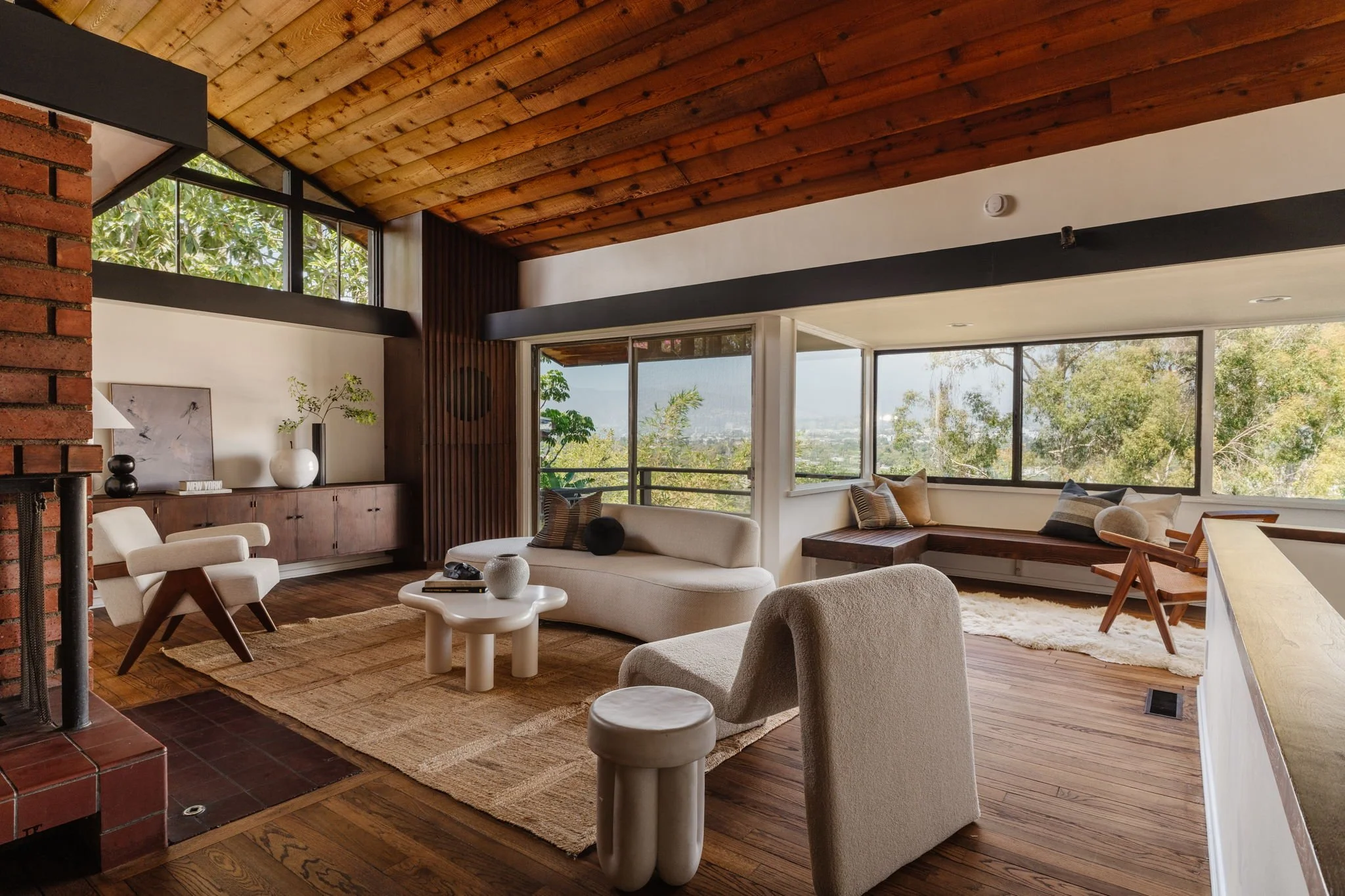
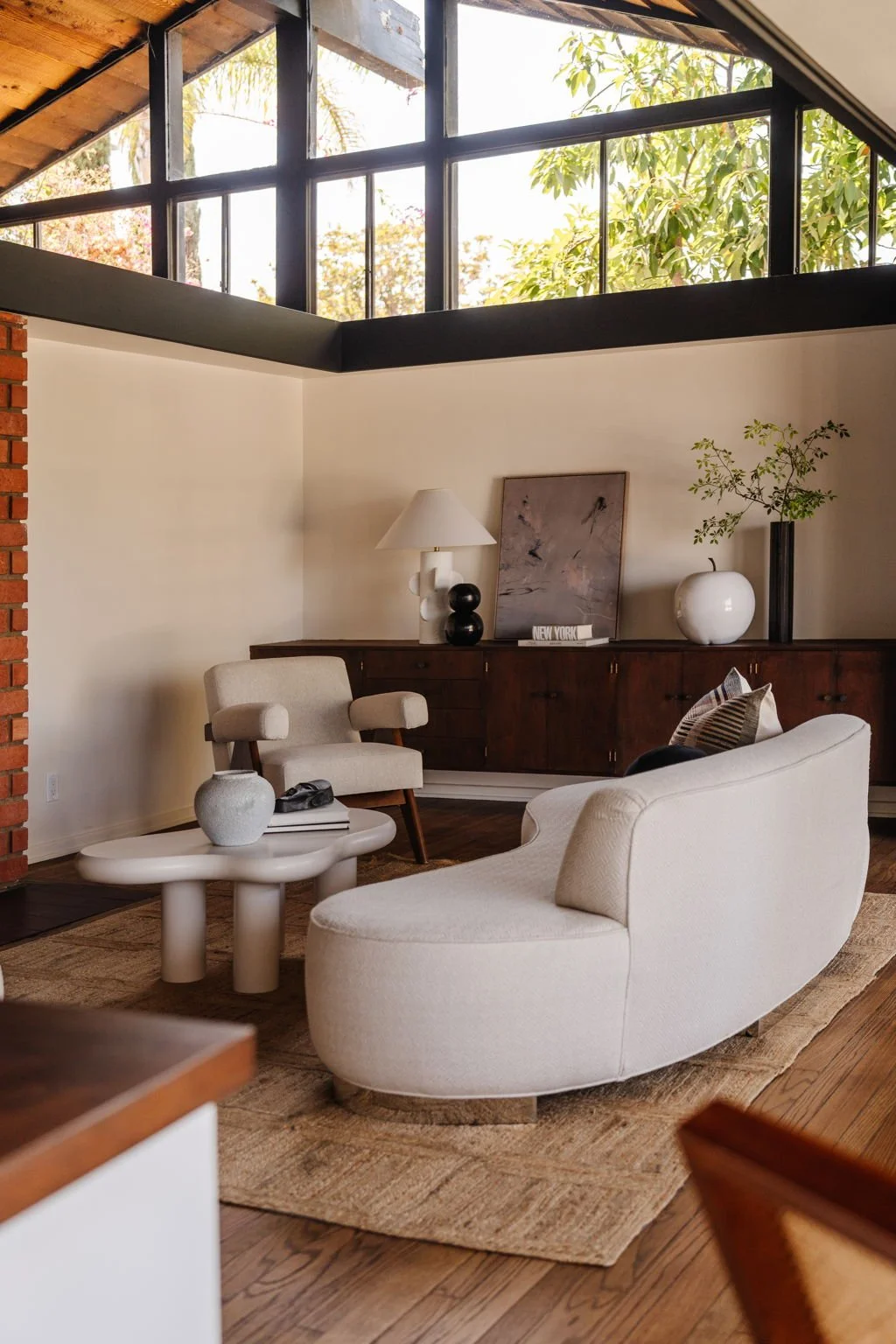
Perched in the hills, Waverly Drive feels less like a traditional city residence and more like a private treehouse suspended among the mature landscape. Walls of windows frame sweeping views, sunlight moves through the rooms throughout the day, and the connection between indoors and out is unmistakable.
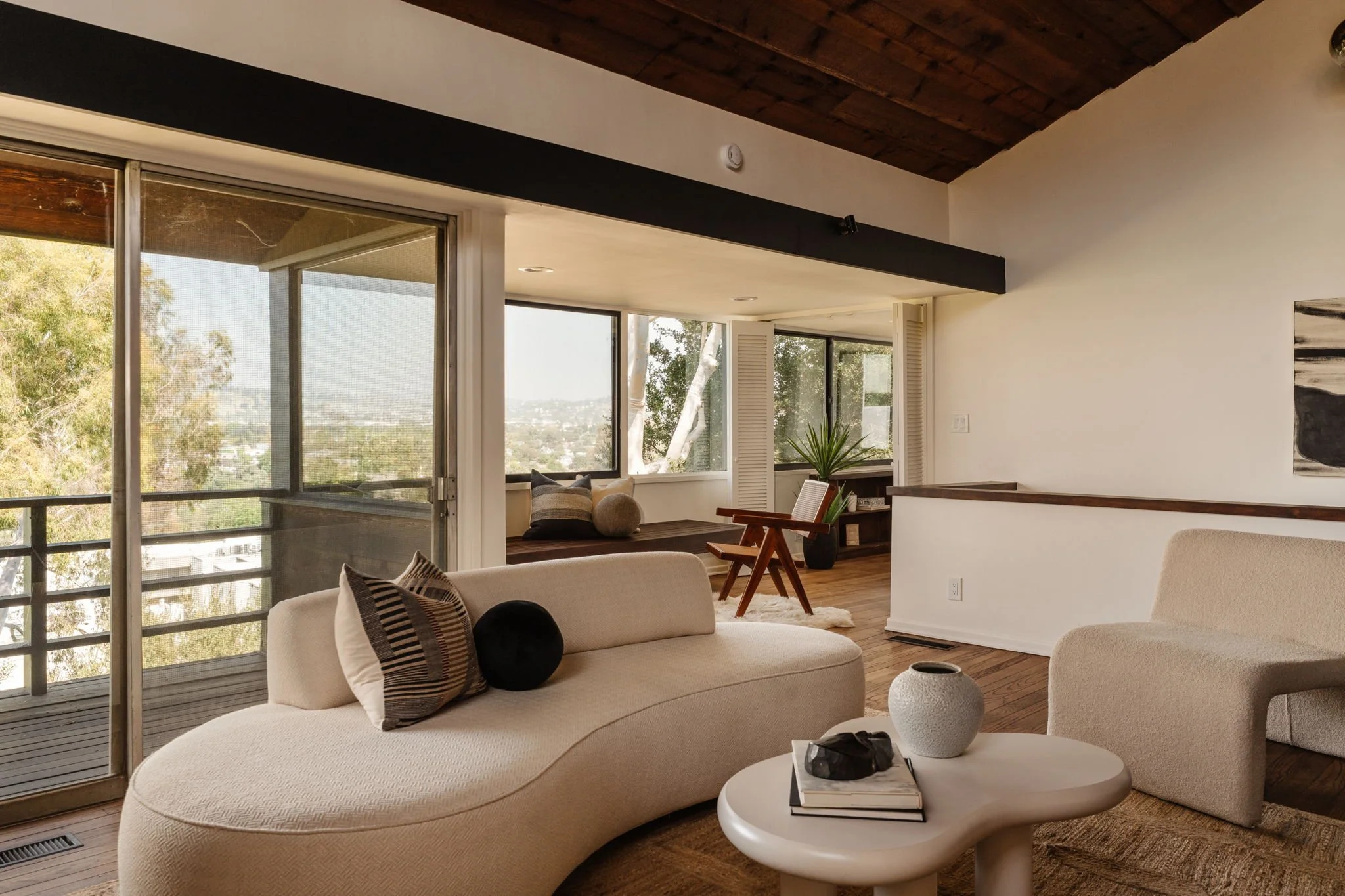
There’s also a wonderful piece of history behind the home. Architect Sam Reisbord designed the house in 1956 as his own personal residence, completing it in 1957. That sense of personal authorship is evident throughout the home. It’s thoughtful without feeling precious, expressive without being loud — a beautifully preserved example of the way Mid Century modern design can respond to both landscape and everyday living.
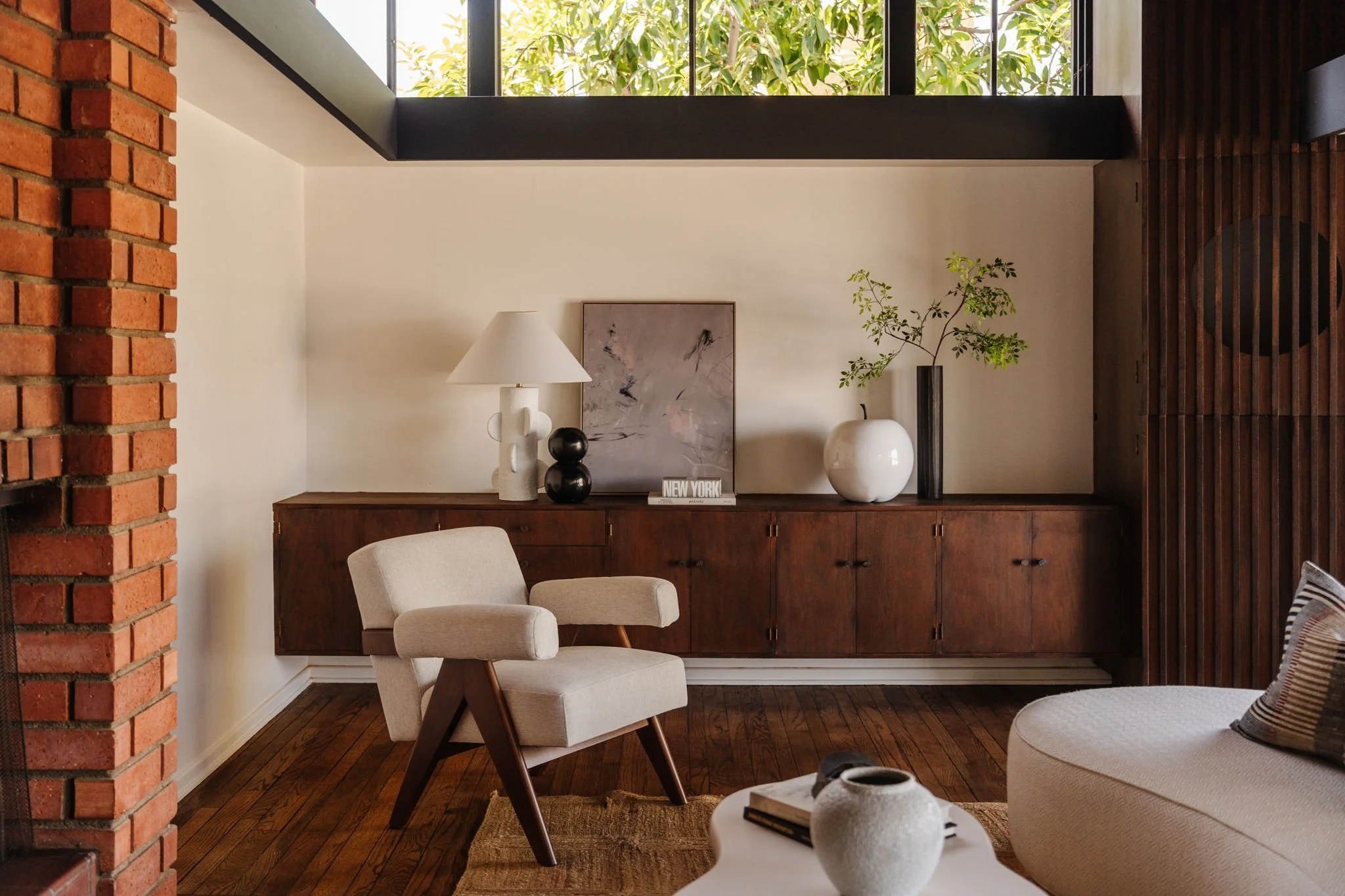
For this staging project, our goal was to honor that original vision while giving the interiors a fresh, contemporary point of view.
We wanted the architecture to lead.
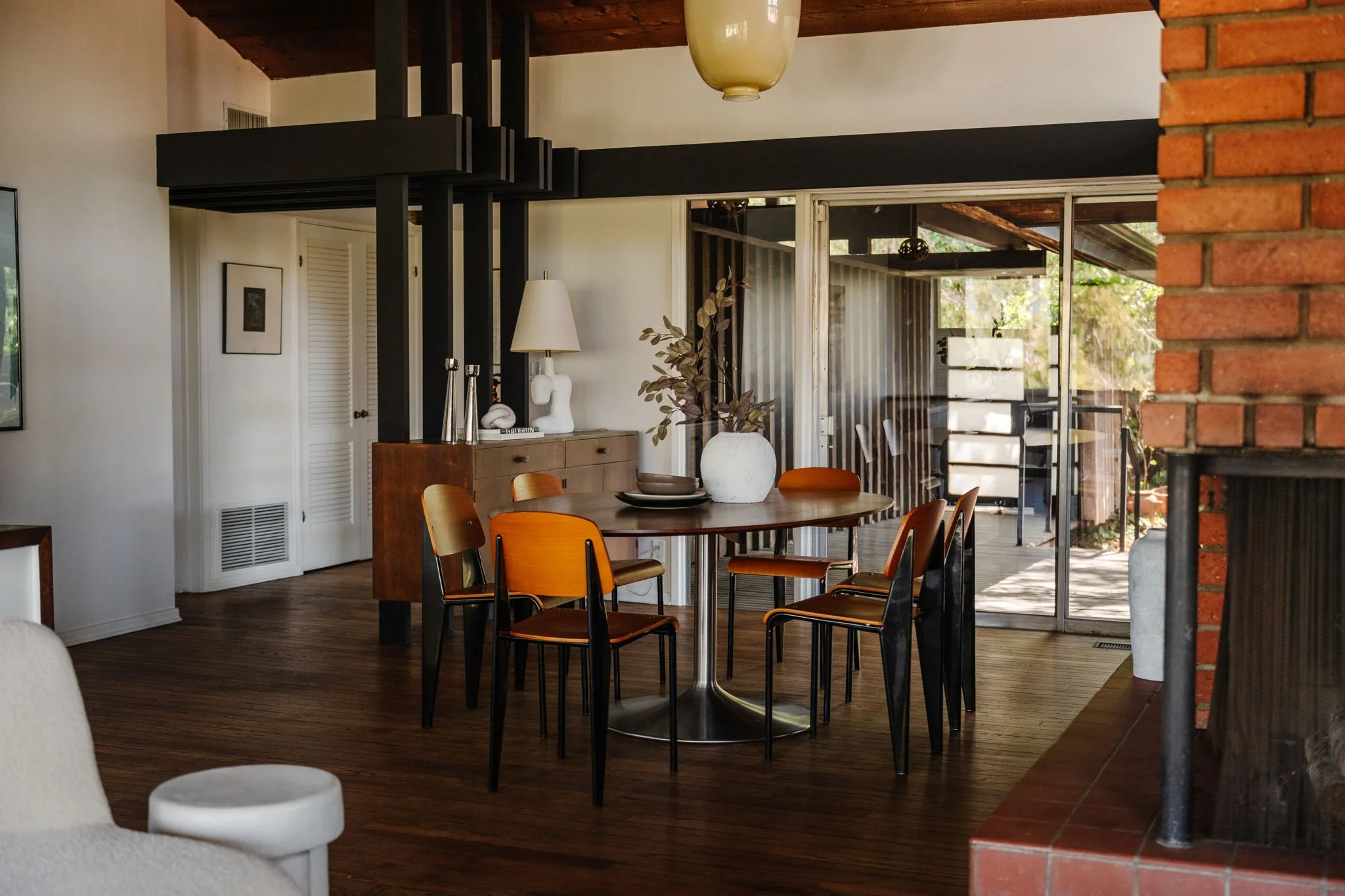
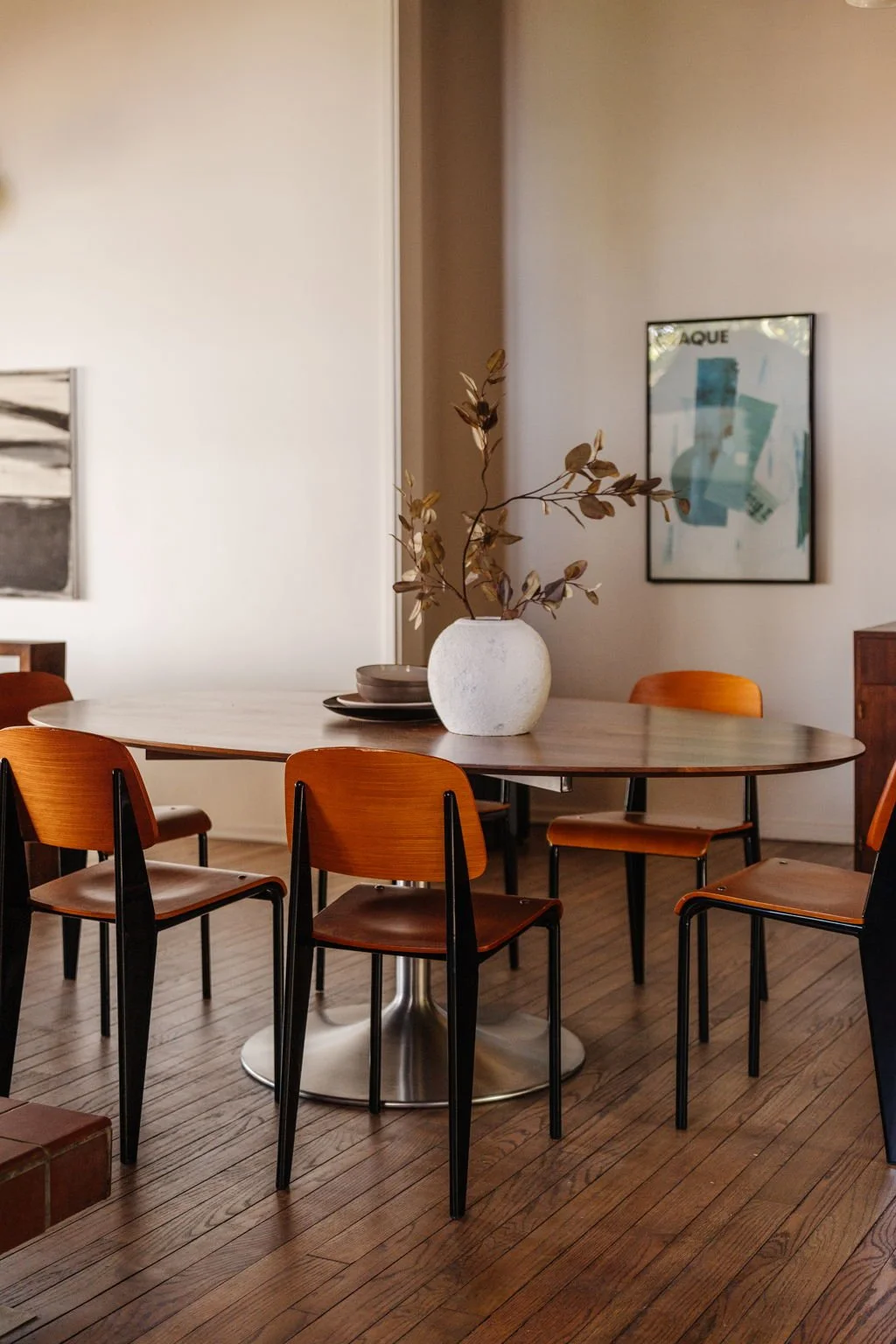
The soaring wood-planked ceiling immediately establishes warmth and scale, while the original brick fireplace provides a strong architectural anchor. Dark structural beams and warm hardwood floors add even more visual richness. Rather than introducing a competing palette, we layered in soft creams, natural linens, earthy textures, and sculptural forms that complement the home's existing materials.
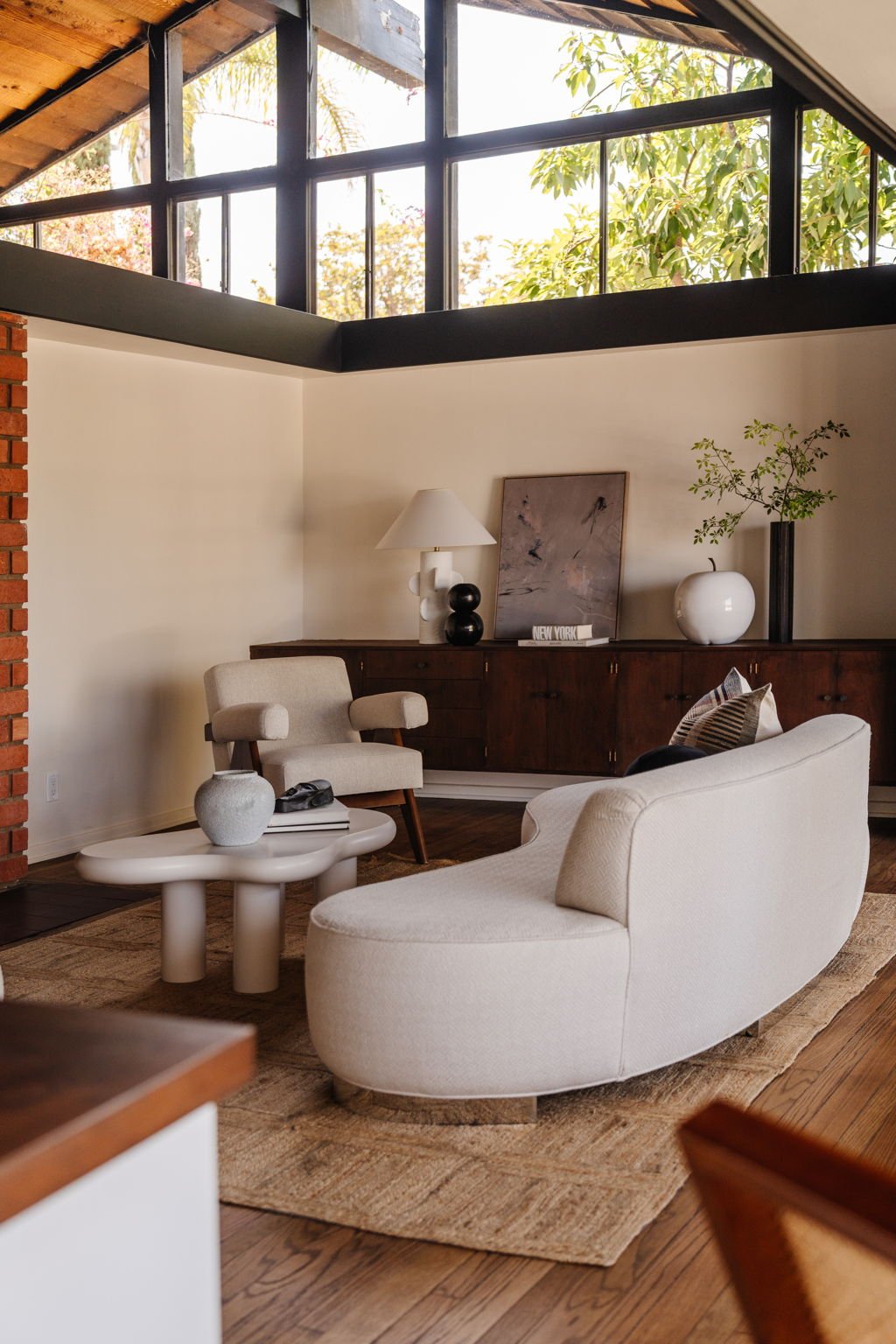
The furniture was intentionally modern, but never stark. A softly curved sofa brings a sense of ease to the living room, while sculptural lounge chairs add shape and personality. A playful organic coffee table introduces another layer of curves, creating a counterpoint to the home's strong horizontal and vertical lines. The result is a room that feels sophisticated and current, while still completely at home within a 1950s hillside residence.
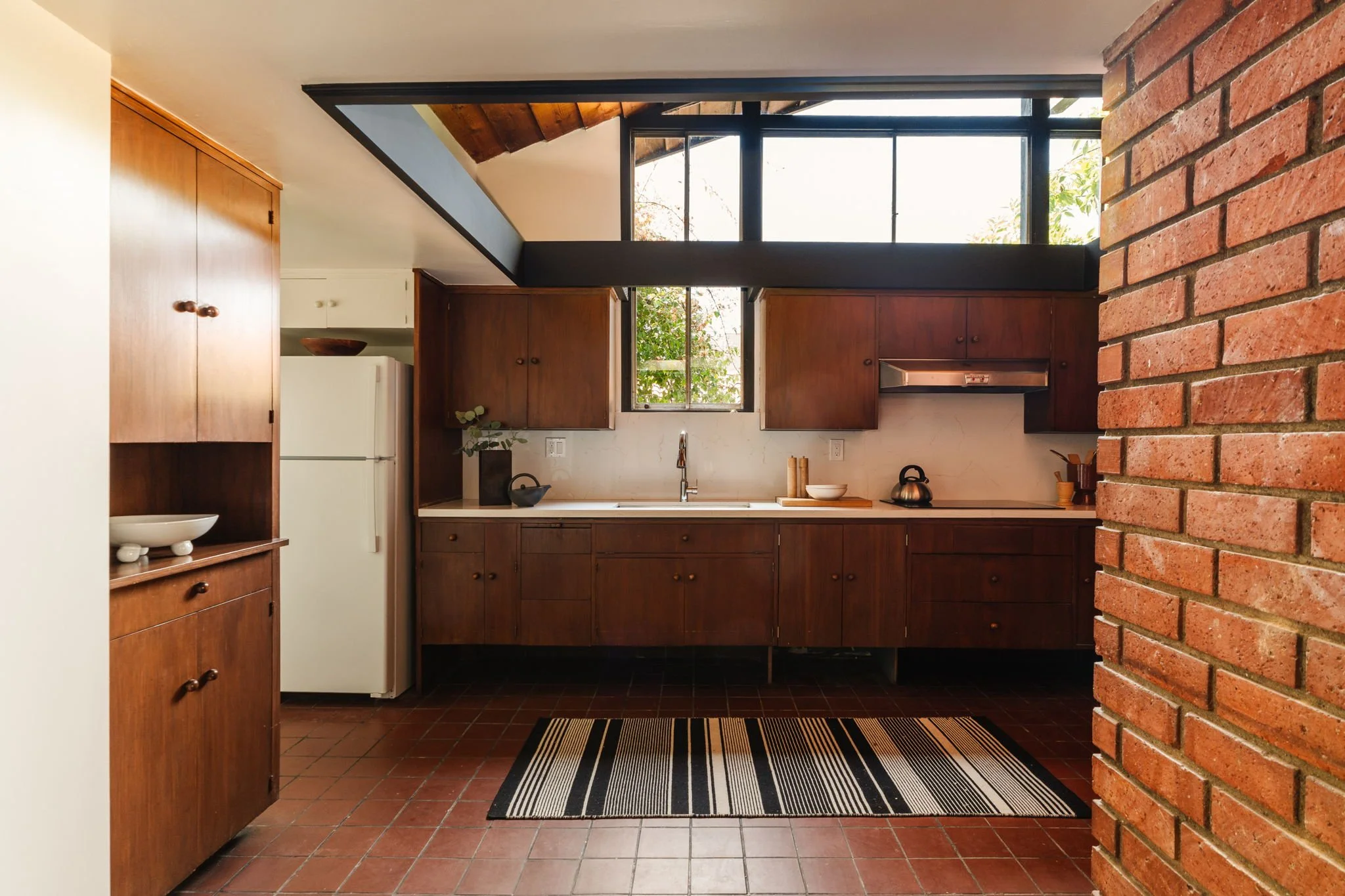
The open living and dining areas further reinforce the home's original Mid-Century sensibility. Designed for both everyday living and entertaining, the main level flows naturally toward the view deck, creating an easy relationship between the interior spaces and the hillside setting. The kitchen continues that sense of openness, while the main-level primary suite offers a quieter retreat overlooking the greenery.
But it’s the overall feeling of the home that stays with you.
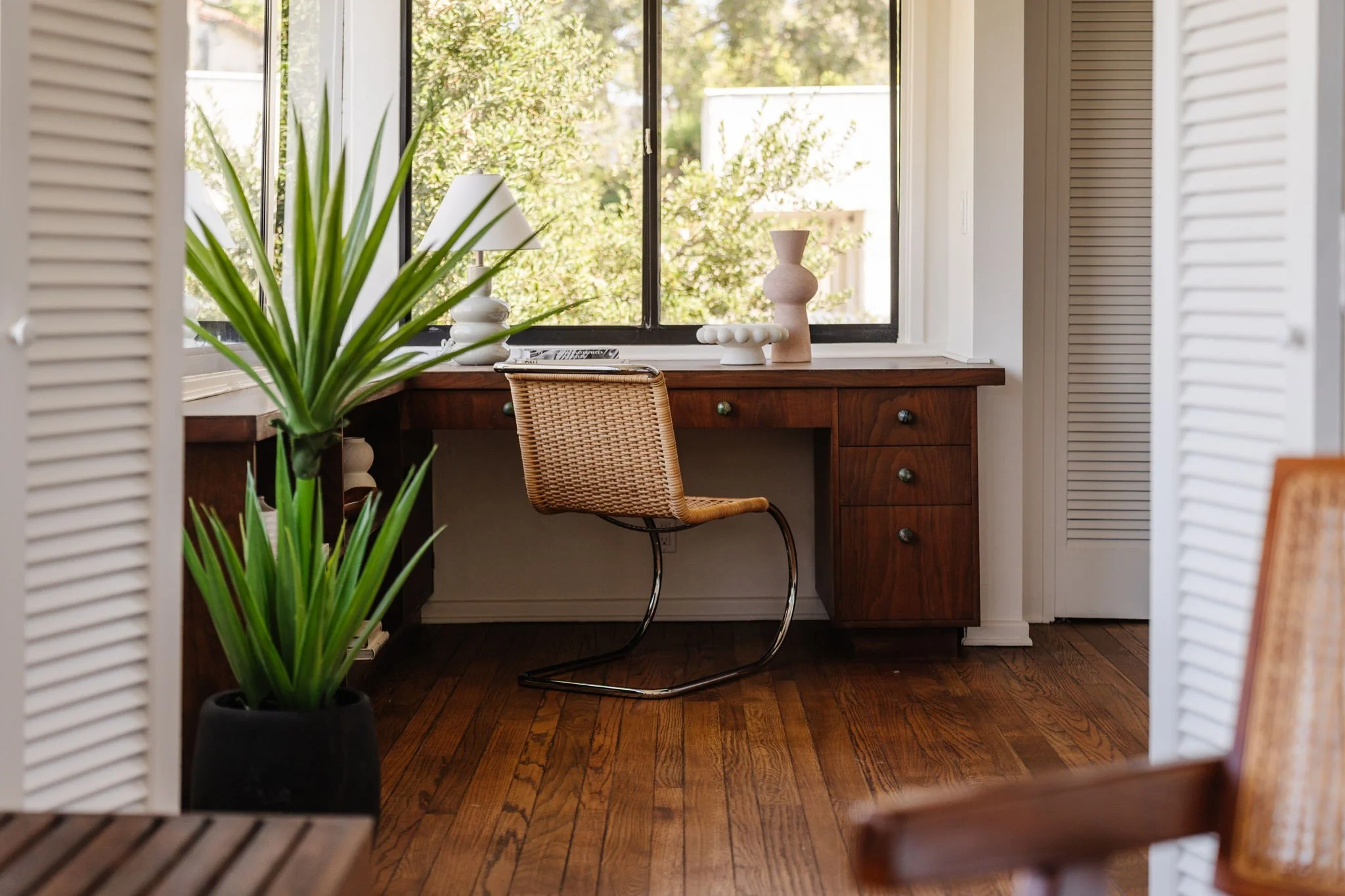
Texture played an equally important role.
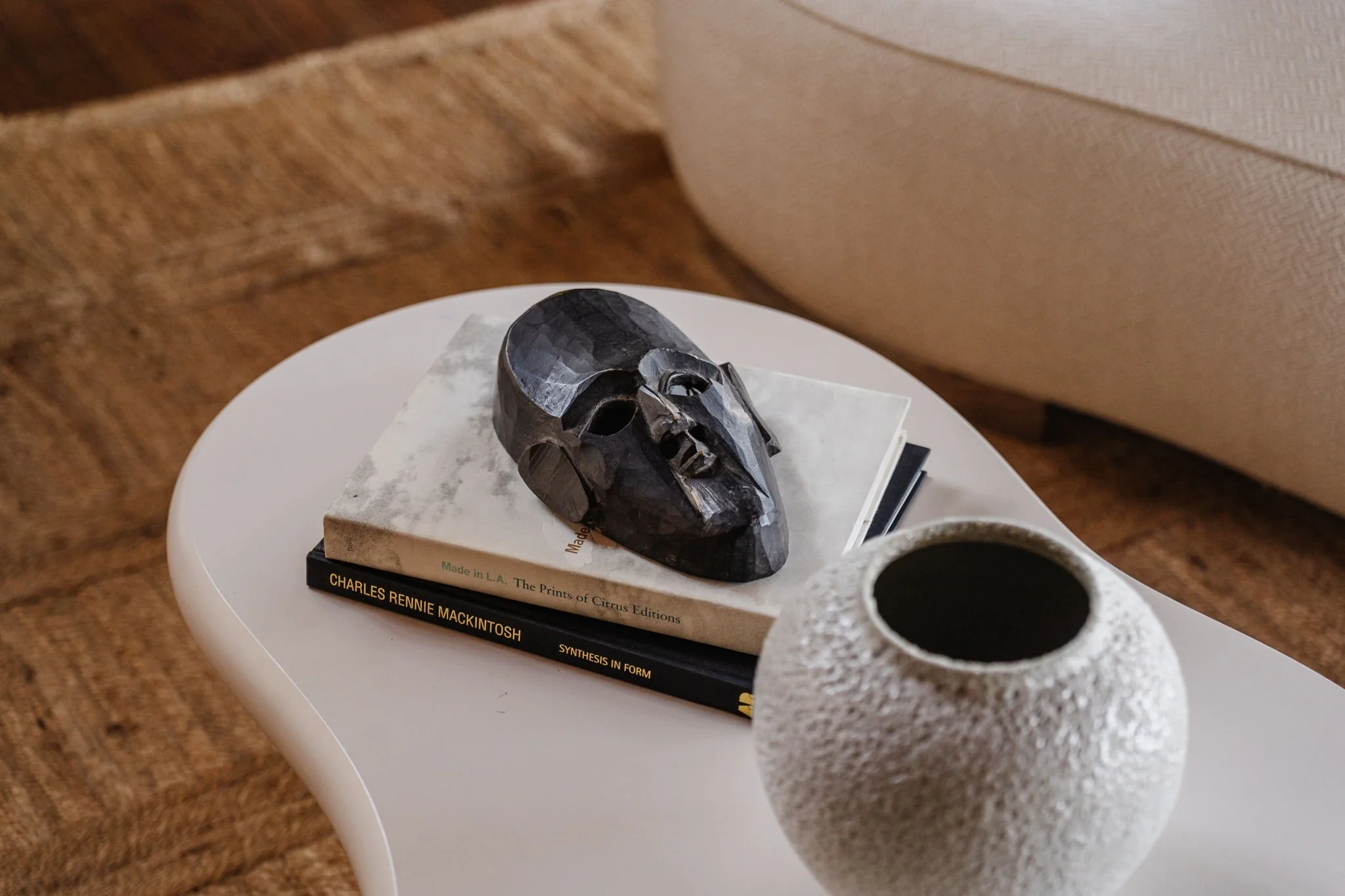
With so much wood and brick already present, we didn't want to overfill the space with pattern or color. Instead, we used tactile materials — woven rugs, boucle upholstery, natural wood, soft textiles, and organic accessories — to create depth without visual clutter. The restrained palette allows the architecture to remain the star.
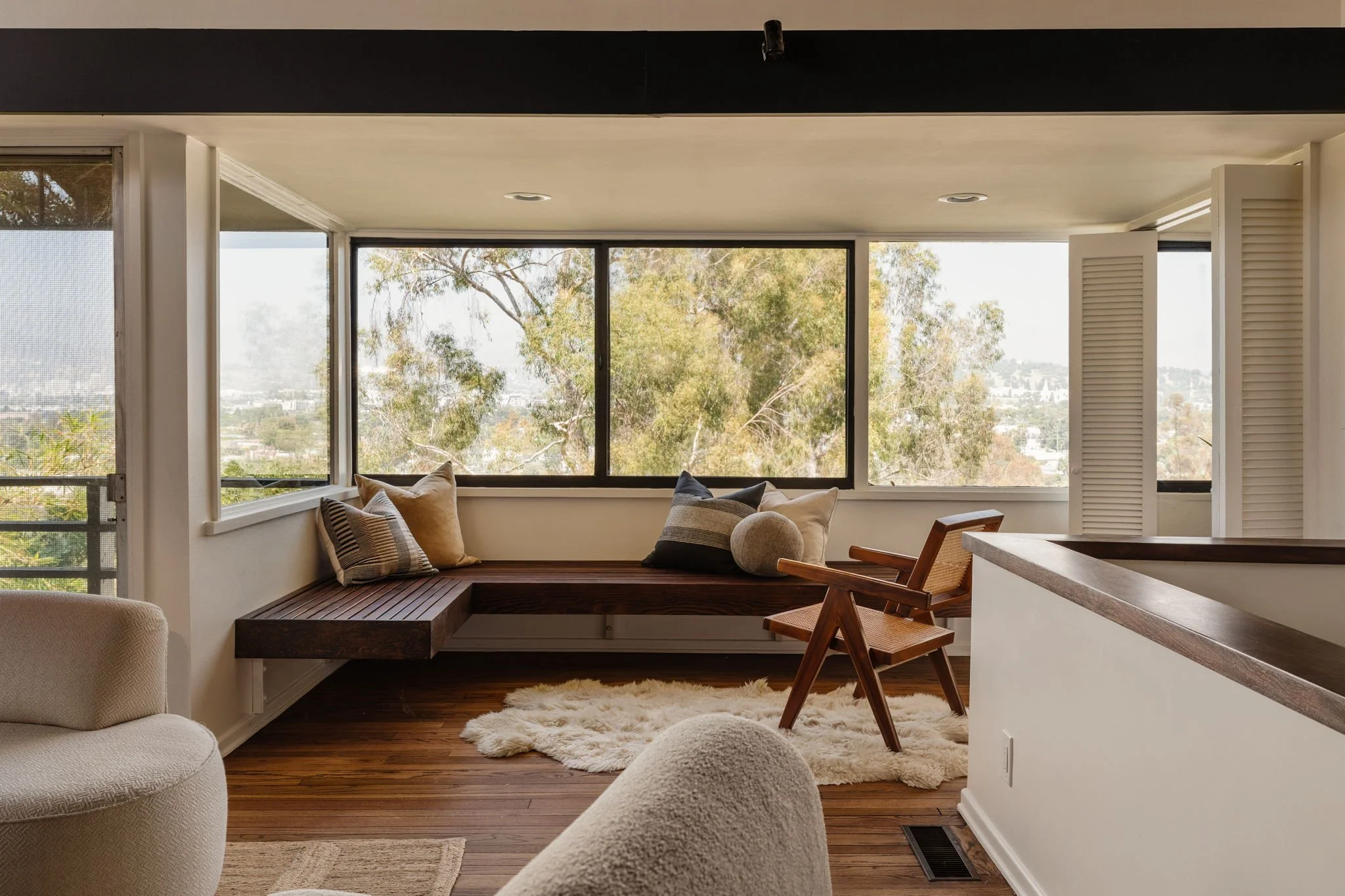
Nearly every room offers a glimpse of the surrounding hills and city beyond, so the staging needed to work with the landscape rather than compete with it. We kept the furniture relatively low and the colors quiet, allowing sightlines to remain open. In the window-lined sitting area, a simple built-in bench becomes an invitation to pause and take in the view. It’s the kind of space that reminds you why hillside homes have such enduring appeal. Then, of course, there are those views.
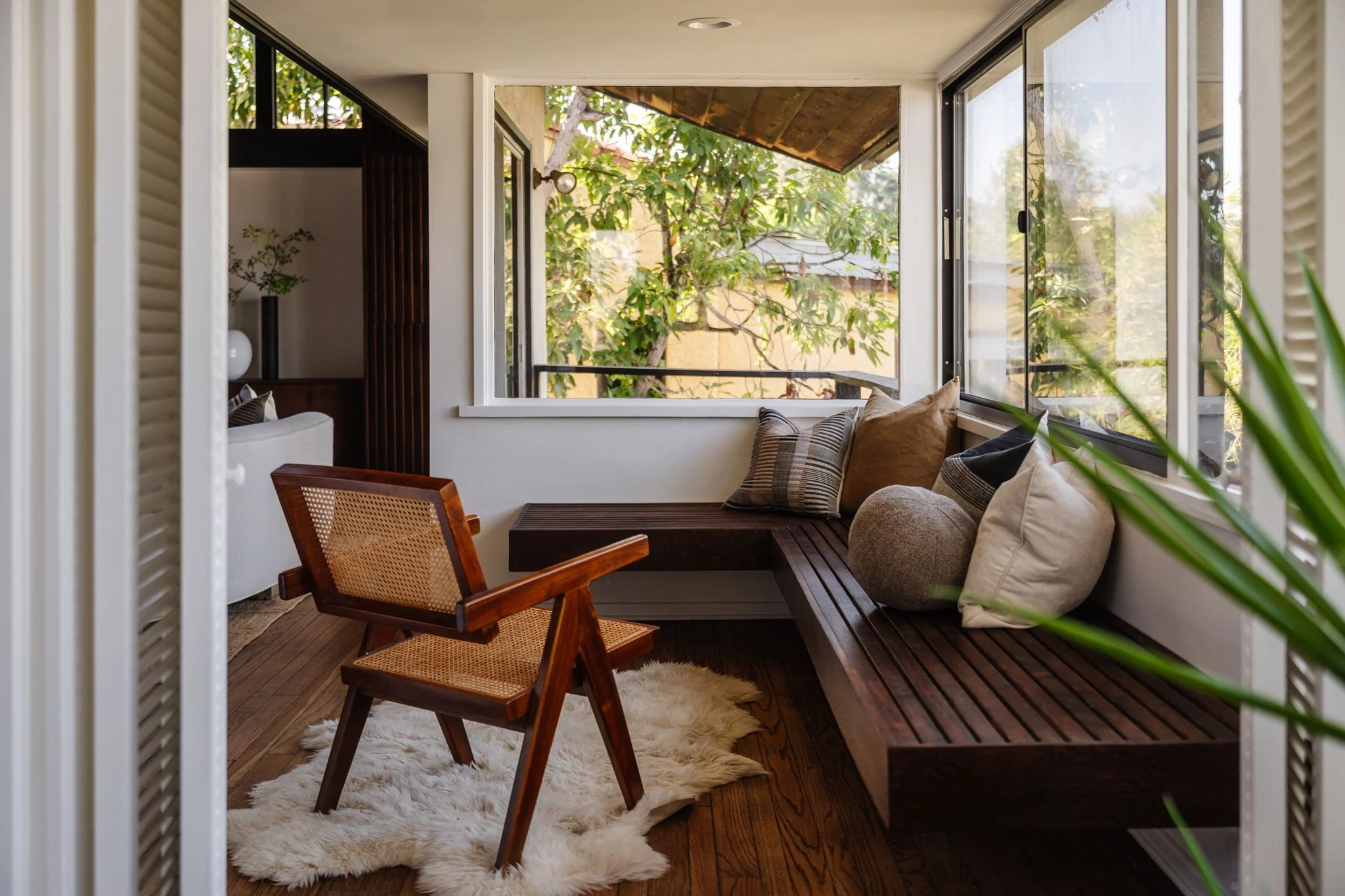
This is one of the things we love most about staging architecturally significant homes: the opportunity isn't to make them feel newer. It's to help people see what is already there.
In this house, that meant respecting the rhythm of the original architecture while introducing furnishings that feel fresh, comfortable, and relevant today. Rounded forms soften the geometry. Creamy upholstery brightens the warm wood. Natural textures reinforce the connection to the landscape. Every choice was meant to feel intentional, but never overly designed.
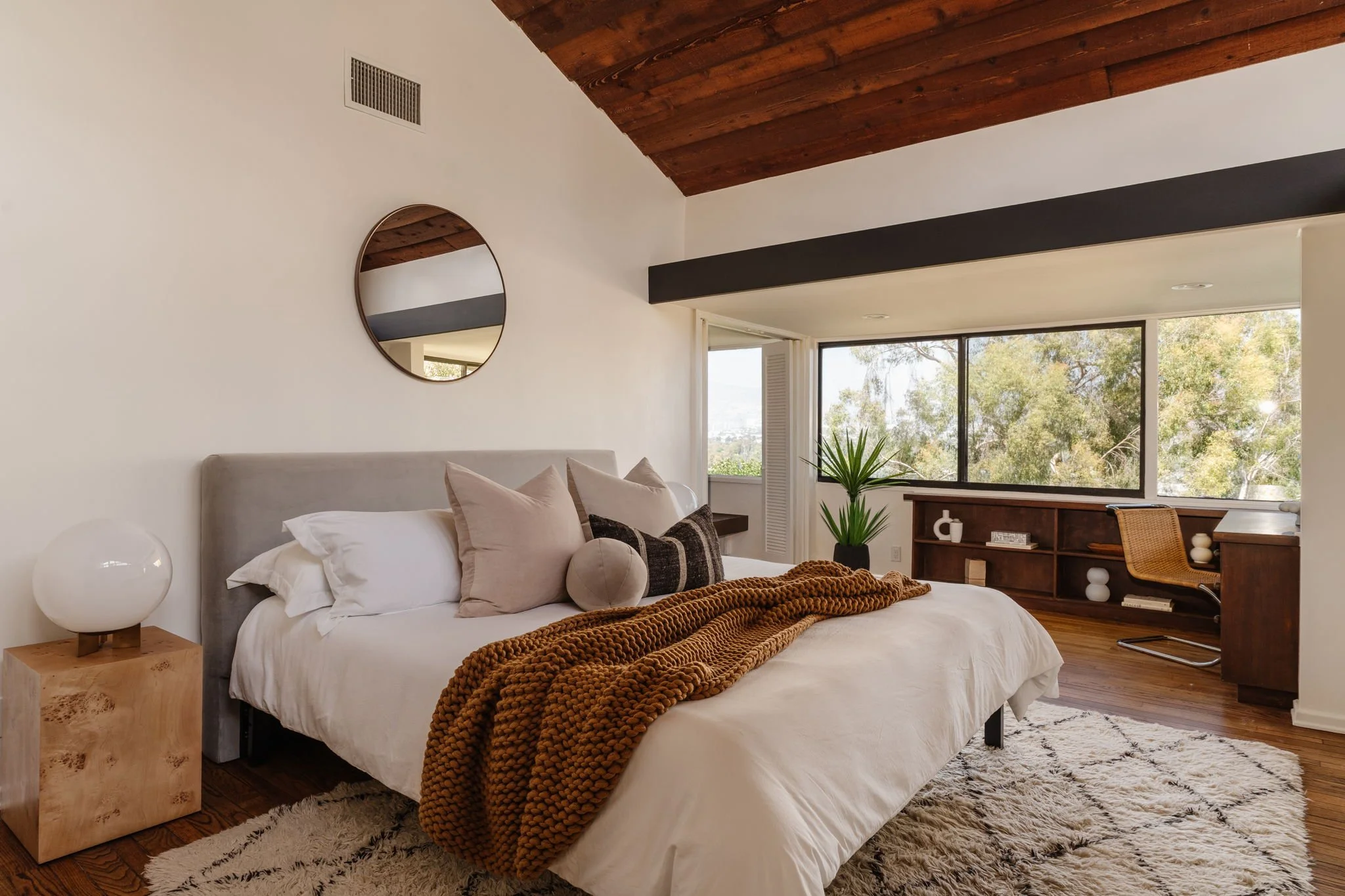
There is something inherently calming about being surrounded by trees, warm wood, natural light, and expansive views. Add thoughtful Mid Century architecture to the mix, and the result is a home with a very particular kind of California magic.
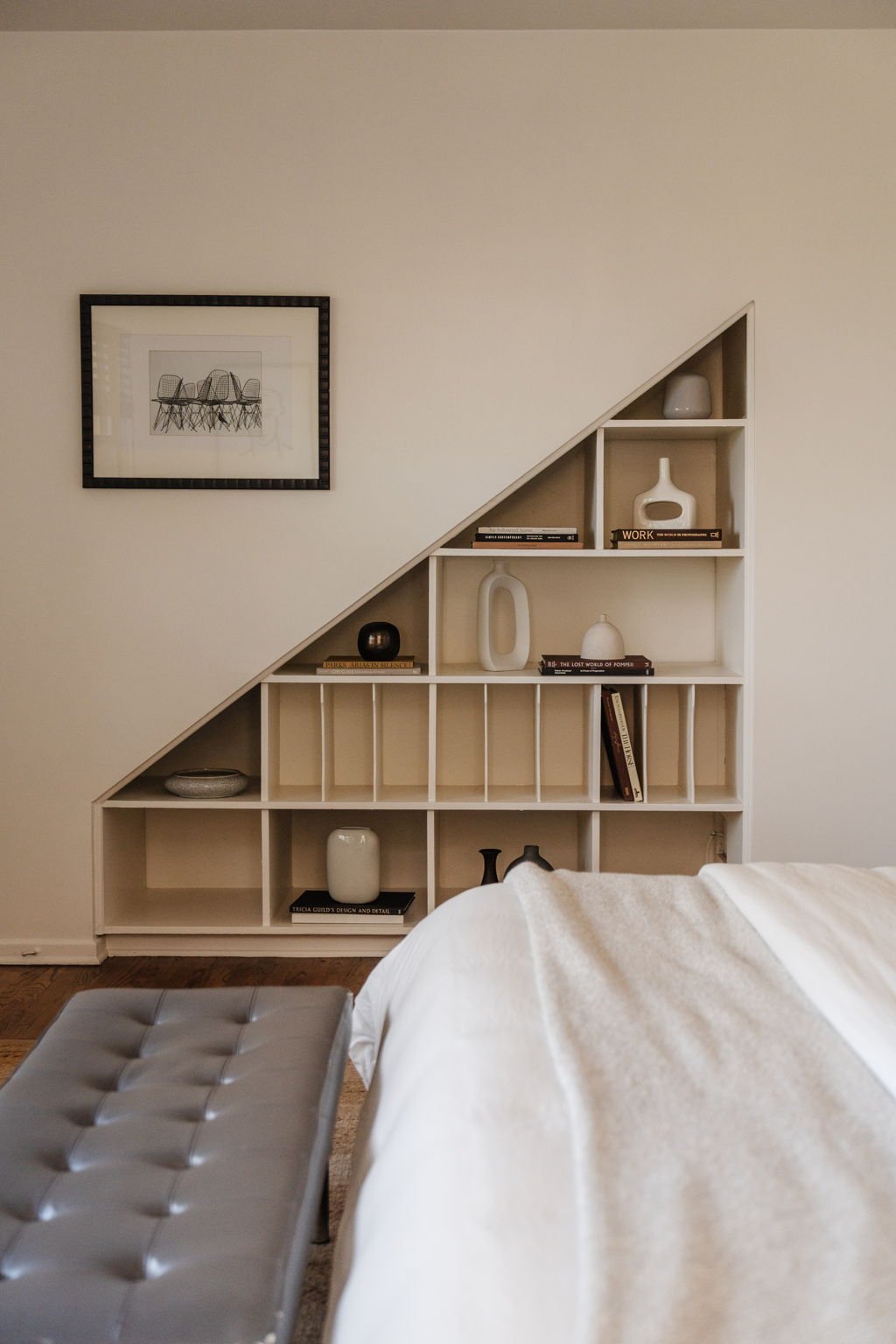
For us, staging Waverly Drive was about finding that balance: preserving the character, emphasizing the architecture, and creating interiors that feel as comfortable today as they might have decades ago.
A home designed by its architect for himself deserves a thoughtful response. We were happy to give it one.